
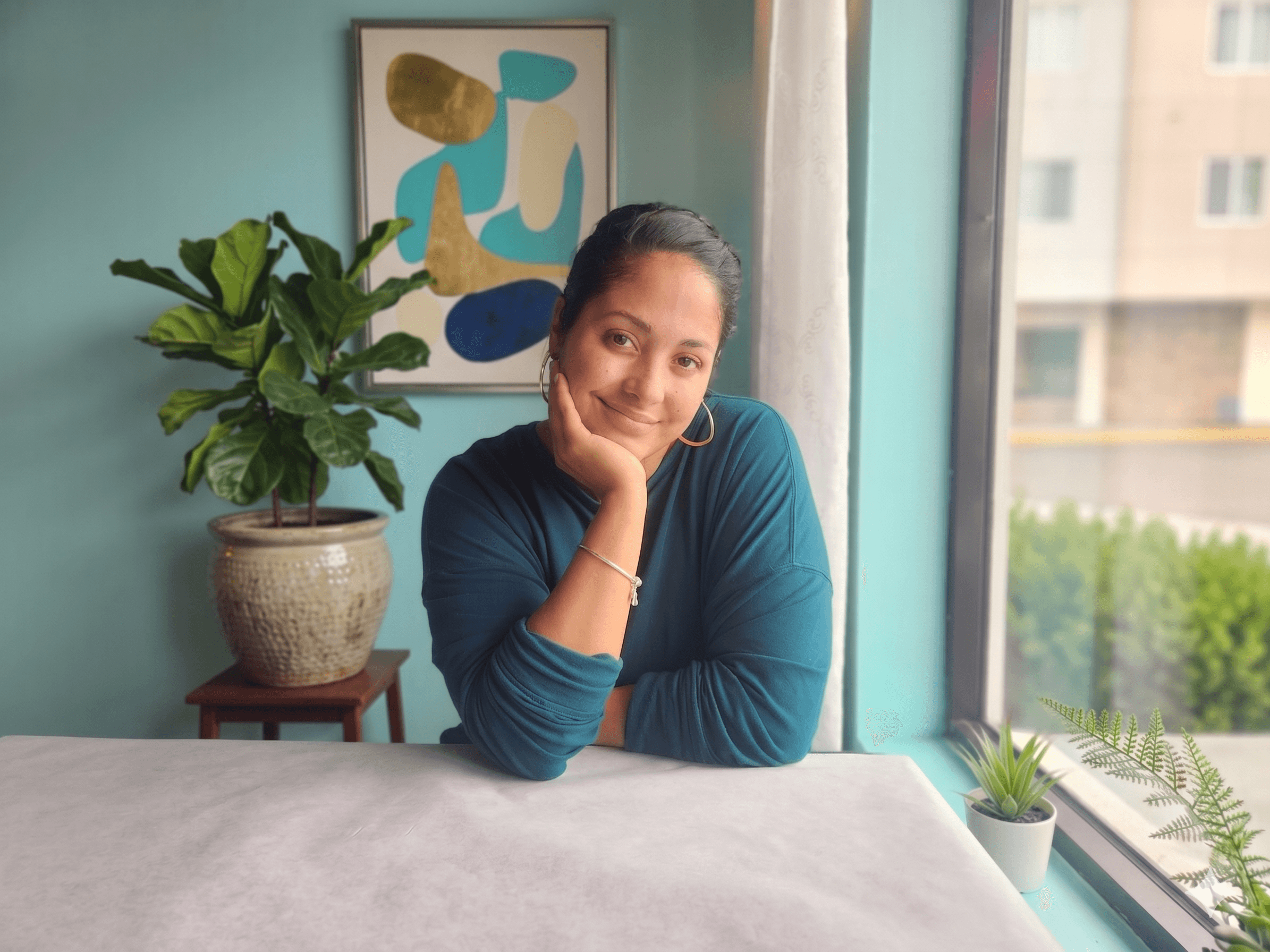
I grew up in homes that were tidy but not designed. There was always something a little off about how the rooms felt — a sofa pushed too tight against a wall, a light fixture two inches too high, a rug that almost worked. Even before I had words for it, I'd rearrange the chairs, change the lamp, push the couch six inches one way. As an adult I figured out the right word for what I'd been doing was ‘composition.’ I'd been designing rooms my whole life without permission.
I tried other styles for a long time. I designed in modern farmhouse, in traditional, in coastal, in whatever someone hired me for. What I kept returning to — and what kept getting commissioned again — was a quieter palette built from natural materials. Warm wood. Hand-troweled plaster. Linen. Sage. Stone in real colors instead of slabs that look like nothing. I started calling it modern organic because it had become a system: modern proportions, organic textures, and a stubborn refusal to over-decorate. It's the throughline that ties a Florida wellness studio to a Texas master bath.
“I've always believed a well-designed room should feel like exhaling.”
I love both sides of the work for different reasons. Residential is intimate. I get to know how a family actually lives — where the kids drop their backpacks, where the parent secretly drinks coffee at 5 a.m., what gets ruined the first week and what gets passed down. The reward is when someone says ‘this finally feels like our house.’ Commercial is harder, and more strategic. The brand is the brief. The space has to do work — bring customers back, scale across locations, justify the rent. The reward there is when a guest cross-attends three locations because the design said ‘same place,’ or when staff start using a common area they used to avoid. Different problems, same eye.
Lucid Motif came from two words I kept circling. Lucid for the clarity I want every project to have — every decision legible, no fog, no design-by-vibes. Motif for the recurring threads that tie a space together: a wood tone, a curve, a textile family, one small detail that keeps reappearing. The best rooms have a motif you can't quite name on the first look but feel on the second. The most successful brands work the same way. It's the work I want to be doing — designing the recurring detail that makes a place feel like itself.
I'm launching the studio remotely now because the tools are finally good enough. Better photo references through phones, better measurements, better video calls than what most agencies used to do in person. A client in California or Atlanta gets the same eye someone in Tampa gets, and I get to keep my life. Tampa Bay clients still get the in-person White Glove tier — installation day on-site, a final styling walkthrough, the whole thing. But the rest of the country isn't a downgrade. It's just a different shape.
That's what Lucid Motif Designs is. A small, deliberate studio. One designer who still cares more about the room than the calendar. If your space is asking to feel like exhaling, I'd love to talk.